Hello, I'm Otsuka, CTO at Liberogic. I've come to realize that internal app development is now at a point where it can happen on a whim. Claude Code was really the big catalyst for that.
LLM evolution and cost shifts
Over the past few years, LLMs (large language models) have proliferated in variety and accuracy, and their cost-performance has improved dramatically.
gpt-oss, which OpenAI announced fairly recently, has already been integrated into various LLM hosting services. Looking at Groq's gpt-oss-120b pricing table, the rates are remarkably affordable.
Even with complex prompts, if you're running at a rate of hundreds of times per month, the cost is negligible.
The spark: "contact inquiry summarization"
Our website has a contact form, and we've been running a system that uses AI to summarize the contents and send them to Slack.
Streamline your email form! Let AI handle spam and sales emails—it's the smart solution.
Initially, we used a simple prompt with gpt-4o. We wanted to improve accuracy further using gpt-oss.
"What if the staff handling inquiries could create their own prompts? That would be interesting."
That was the idea, but testing a prompt required a developer to write a Node program calling the LLM API, paste past inquiry data, and run it to verify. Easy for engineers, but a higher barrier for directors.
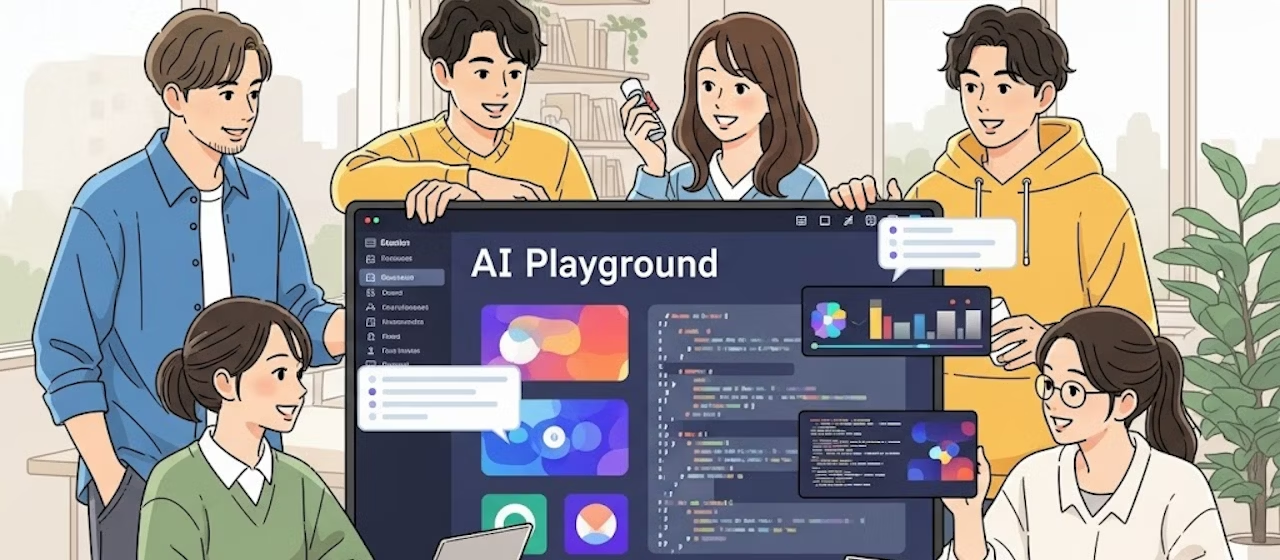
So we came up with the idea to build an internal 'playground' version of the AI service.
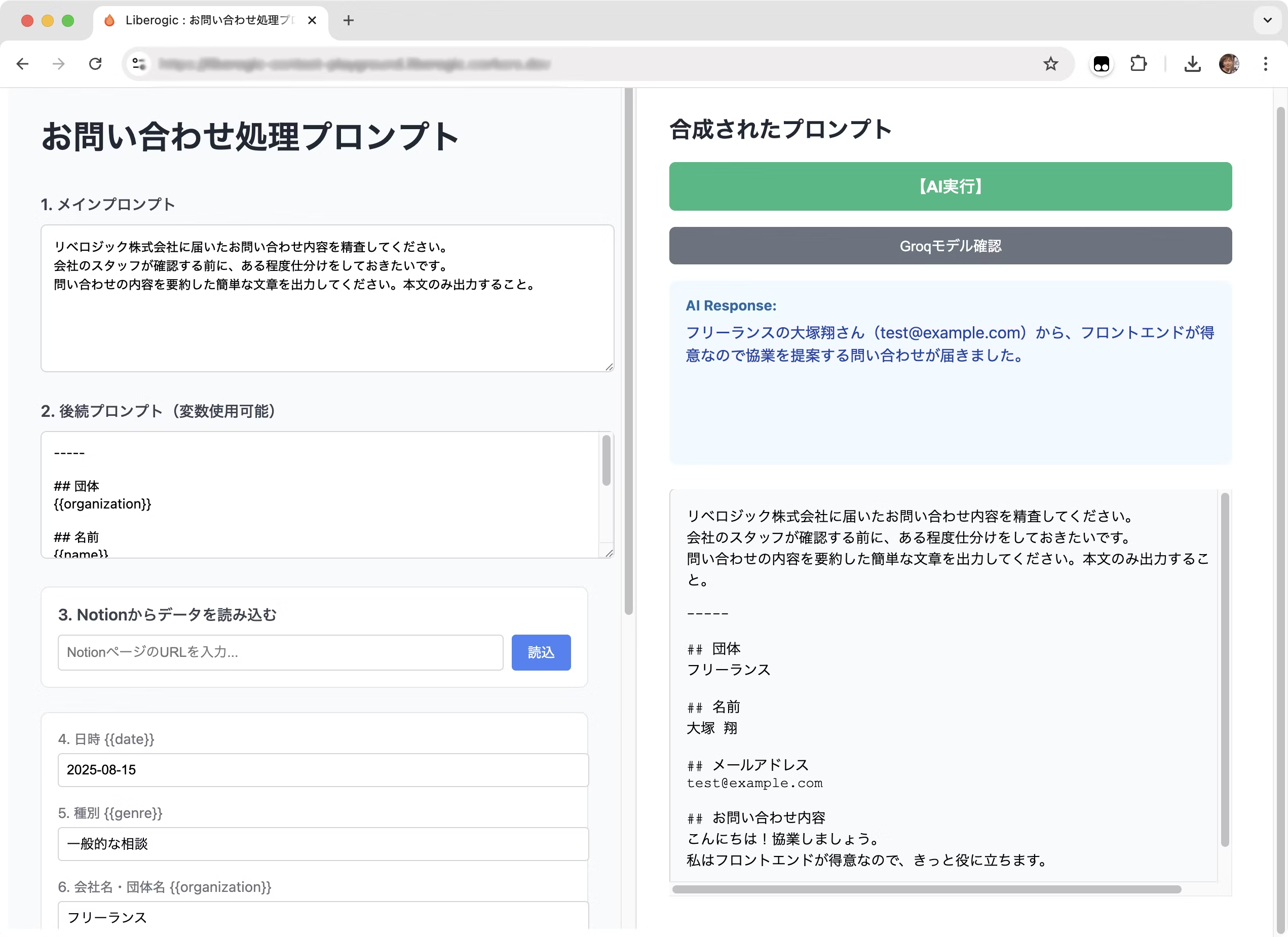
We created a single-page web app.
The design is very simple.
- A prompt input field on the left
- Load past inquiry data saved in Notion
- Call the Groq API and display results on the right
Despite having only these features, it created an environment where the director could test it right away.
In the past, even internal tools at this scale would require significant time for infrastructure setup and server configuration. Now, with environments like Cloudflare Workers, you can launch in no time. And once requirements are solidified, ClaudeCode can generate the program in minutes.
The total time spent was just about 2 hours.
From idea to completion, it took just about 2 hours ※.
We published it the same day, and the team—including internal directors—could start testing it right away.
What strikes me isn't that non-engineers can now use AI.
"Because we can build internal apps quickly, we can involve not just engineers, but everyone around us in the development process." — that's what's truly exciting.
You can create purpose-built tools in a short time and iterate on them with the entire team testing.
I believe this kind of workflow will make future projects even more rewarding.
※The most time-consuming part wasn't the program itself, but understanding how to set up client-side scripts using Hono + Vite.



The backbone of Liberogic's engineering division. When she hears "I wish we had something like this" or "that would be so convenient," she instantly implements it with added value using her natural ingenuity. Our company treasure with excellent communication skills and many fans among our clients—and a devoted cat lover.
Sho Otsuka
Director/CTO / Chief Engineer / Representative Director of Nekoana LLC / Looks suspiciously young